Running is one of the most popular forms of exercise for people of all ages. It’s accessible, effective, and a great way to boost cardiovascular health. But if you regularly experience knee pain after running, you’re not alone. Knee pain is one of the most common complaints among runners, and while it’s often caused by overuse, it can also signal an underlying injury that needs attention.
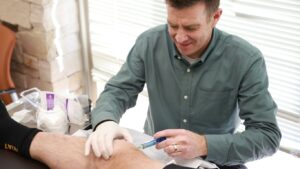
Whether you’re a weekend jogger or a competitive athlete, the providers at The Orthopedic Partners can help runners like you identify the root cause of your pain and get back to doing what you love.
Why Does My Knee Hurt After I Run?
The knee is a complex joint that absorbs significant force with every step. When running, your knees bear up to three times your body weight with each stride. That repeated impact can strain the structures around the knee, especially if there’s underlying weakness, improper alignment, or poor running mechanics.
Common reasons for knee pain after running include:
- Overuse or repetitive strain
- Muscle imbalances
- Poor footwear or running form
- Sudden increases in mileage or intensity
- Pre-existing structural issues in the hip, foot, or knee
Let’s take a closer look at the most common running-related knee conditions.
1. Runner’s Knee (Patellofemoral Pain Syndrome)
Runner’s knee is one of the most frequent causes of knee pain in athletes. It refers to pain around the front of the knee, typically beneath or around the kneecap (patella).
Symptoms may include:
- Dull, aching pain during or after running
- Pain when going up or down stairs
- Discomfort after sitting for long periods
- Clicking or popping in the knee
Runner’s knee often develops due to misalignment of the kneecap, weakness in the quadriceps or glutes, or overuse. If caught early, it often improves with physical therapy, rest, and changes to your training routine.
2. Iliotibial (IT) Band Syndrome
The iliotibial band is a thick band of connective tissue that runs from the hip to the shin along the outside of the thigh. When the IT band becomes tight or inflamed, it can rub against the outer knee, causing pain, especially during long-distance runs.
Symptoms may include:
- Sharp pain on the outer side of the knee
- Pain that starts during a run and worsens with continued activity
- Tenderness when pressing on the outside of the knee
Tight hip and glute muscles, poor foot mechanics, and downhill running can all contribute to IT band syndrome. Treatment includes stretching, foam rolling, and strengthening exercises for the hips and core.
3. Patellar Tendinitis (Jumper’s Knee)
While more common in jumping sports, patellar tendinitis can also affect runners. It involves inflammation or microtears in the tendon connecting the kneecap to the shinbone.
Symptoms may include:
- Pain just below the kneecap
- Stiffness or tenderness in the front of the knee
- Pain that worsens with running or after activity
This condition results from repetitive stress and overloading the tendon. Rest, ice, and strengthening exercises, particularly eccentric loading, can help restore tendon health.
4. Meniscus Tear
The meniscus is a C-shaped piece of cartilage that cushions the knee joint. A sudden twist or degeneration over time can cause it to tear, especially if the knee is already under repetitive stress from running.
Symptoms may include:
- Clicking, locking, or catching in the knee
- Pain and swelling
- Difficulty fully bending or straightening the knee
While some small meniscus tears may become asymptomatic with rest and physical therapy, others may require minimally invasive surgery, especially if symptoms interfere with daily activities.
5. Osteoarthritis
In older runners or those with a history of joint issues, osteoarthritis can cause knee pain after running due to the gradual breakdown of cartilage in the joint.
Symptoms may include:
- Aching, stiffness, or swelling after activity
- Morning stiffness that improves with movement
- A sensation of grinding or decreased range of motion
Although arthritis is not reversible, managing inflammation, improving joint mechanics, and adjusting your training plan can help reduce discomfort and keep you moving.
When to See an Orthopedic Specialist
Occasional soreness after running is normal, especially if you’ve increased your training or returned to running after a break. However, if you experience any of the following, it’s time to consult an orthopedic specialist:
- Knee pain that persists beyond a few days or worsens with activity
- Swelling, locking, or instability in the joint
- Inability to fully bend or straighten your knee
- Pain that interferes with your training or daily life
At The Orthopedic Partners, we’ll assess your symptoms, movement patterns, and training habits to determine what’s causing your knee pain after running and build a treatment plan that fits your goals.
Treatment Options for Knee Pain After Running
Treatment depends on the underlying cause, but may include:
- Physical therapy to improve strength, flexibility, and biomechanics
- Temporary activity modification
- Custom orthotics or footwear recommendations
- Anti-inflammatory medications or topical therapies
- Corticosteroid or biologic injections (in select cases)
- Minimally invasive surgery if conservative options don’t provide relief
Keeping Your Knees Healthy as a Runner
Preventing knee pain begins with proactive care. Here’s what you can do:
- Warm up and cool down properly before and after each run
- Focus on hip, glute, and core strengthening
- Increase mileage gradually
- Replace worn-out running shoes every 300–500 miles
- Cross-train to reduce repetitive impact and build balanced strength
Get Back on Track with The Orthopedic Partners
If you’re dealing with knee pain after running, don’t push through it and hope it gets better. The sooner you address the problem, the sooner you can get back to the sport you love, without discomfort holding you back.
Click here to request an appointment with The Orthopedic Partners today!